
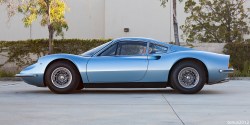
I did the surfacing and painting on this Dino 246 GT Chairs and Flairs more than three years ago and it still looks great! Recently I had the opportunity to take it out for a photo shoot. I hope you enjoy these beauty shots of Jon G’s stunning and meticulous restoration of his Dino.
A big thank you to Tony Bird for his time and talent in taking these photos! What a pleasure to work with a professional that is so easy going.
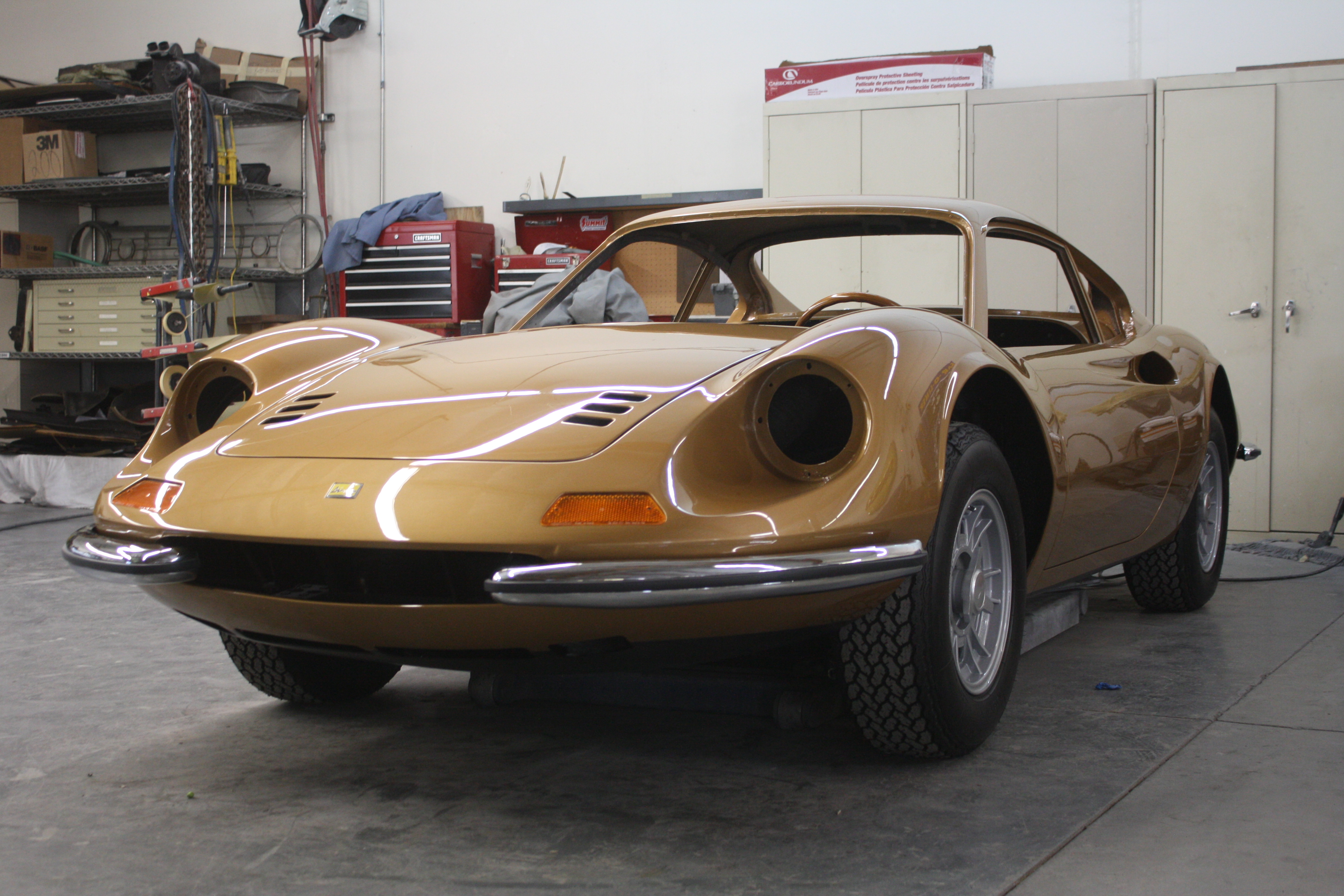
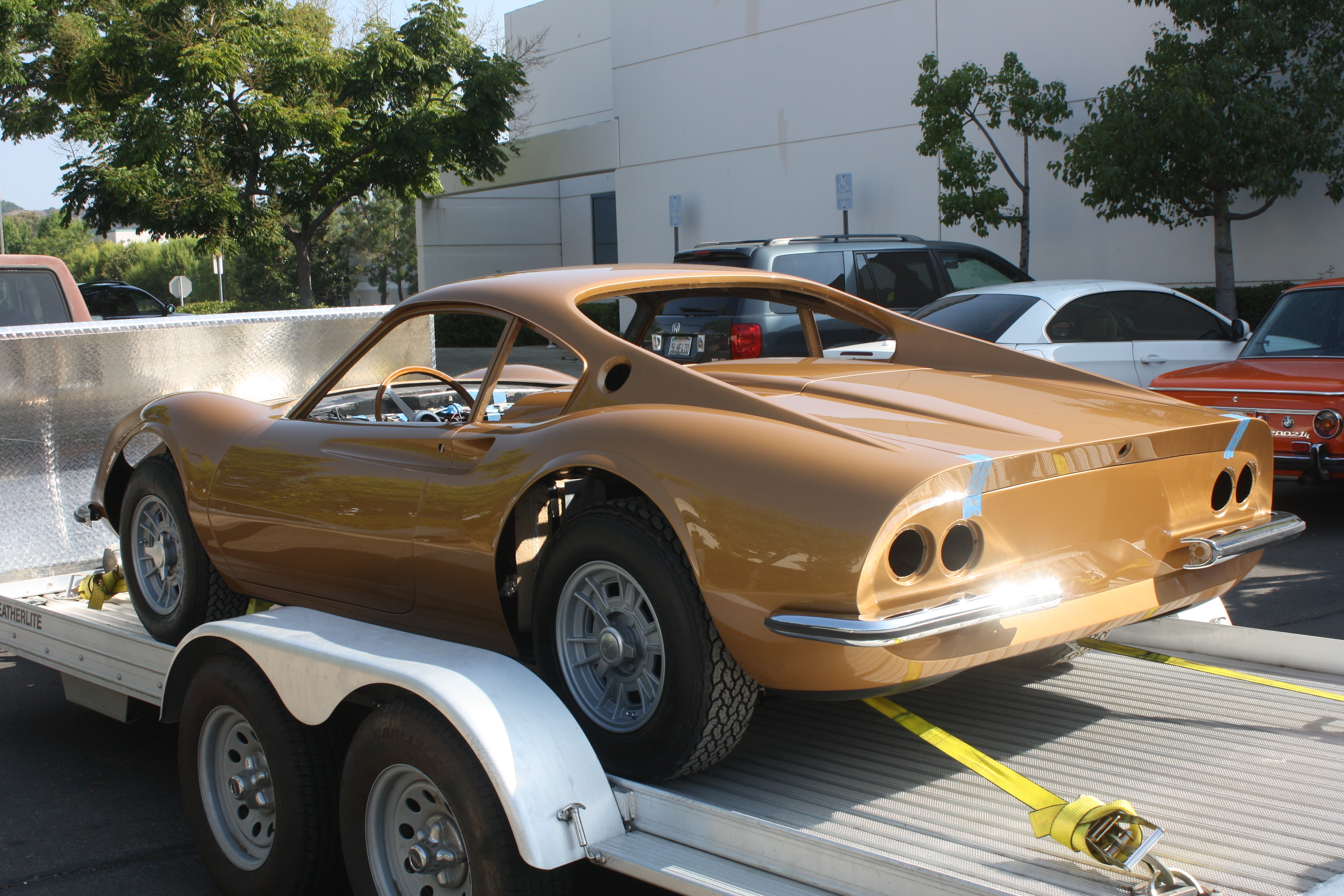
Today was delivery day… well at least in a sense. It actually goes off to Jon G’s shop to be reassembled now with a new original interior. But my work is done. It was nice to see a happy face on a client who appreciates the hard work and diligent effort it took to surface and paint his Dino 206. He was amazed at the fit and finish. I got to tell you, he flipped when he saw the finished product.
I don’t often quote clients’ comments but this man’s appraisal of my work has stuck in my head. Upon seeing his finished paint job he said, “Simply amazing! With this paint job this is going to be the nicest 206 in the world when it’s finished.” See for yourself…


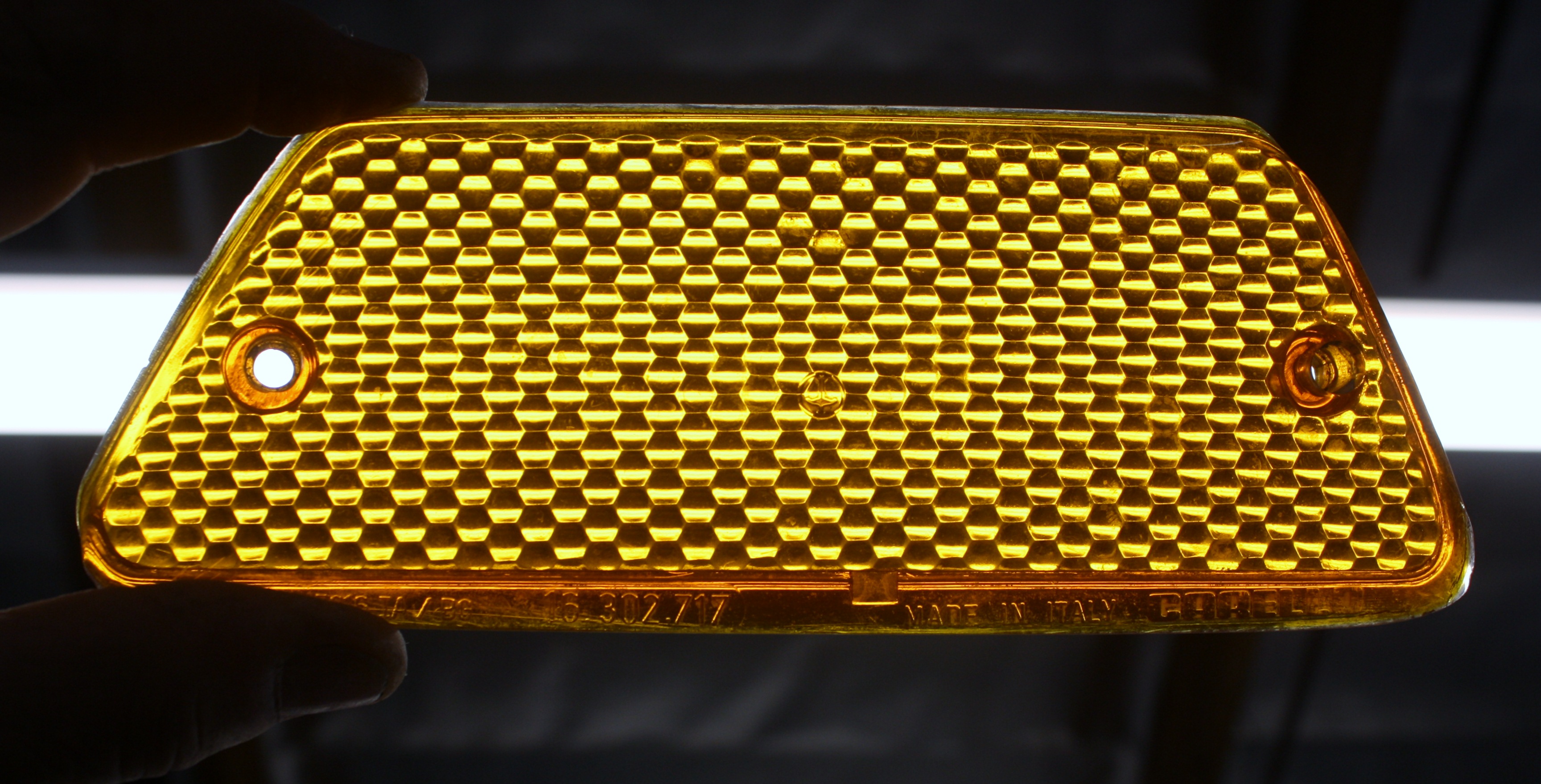
Forty three year old Dino 206 lenses – in the elements everyday – abused, scratched, pitted and faded. Replacement lenses can be difficult to find … and costly! Especially when you’re looking for the original “made in Italy” parts. What if you don’t want to buy a brand new pair of lenses? Or you can’t find the original? How do you bring the originals back to life?
There is a remedy that won’t cost you an arm and a leg. Try color sanding them and rubbing them out! Check out the How to… Make Old Lenses Look New from Tips & Ticks for more information.
How can you tell if a car is hand built?
It may not be so obvious from looking at a beautifully restored Dino but there are signs of the craftsmanship as well as the technique of the day. Usually they are hidden. Some are very difficult to find. This little piece of evidence is hidden behind the inner wheel well of a Dino 206. You’d never see it unless you had reason to take off the inner wheel well.
What do you see?
Clue: This is where it starts.
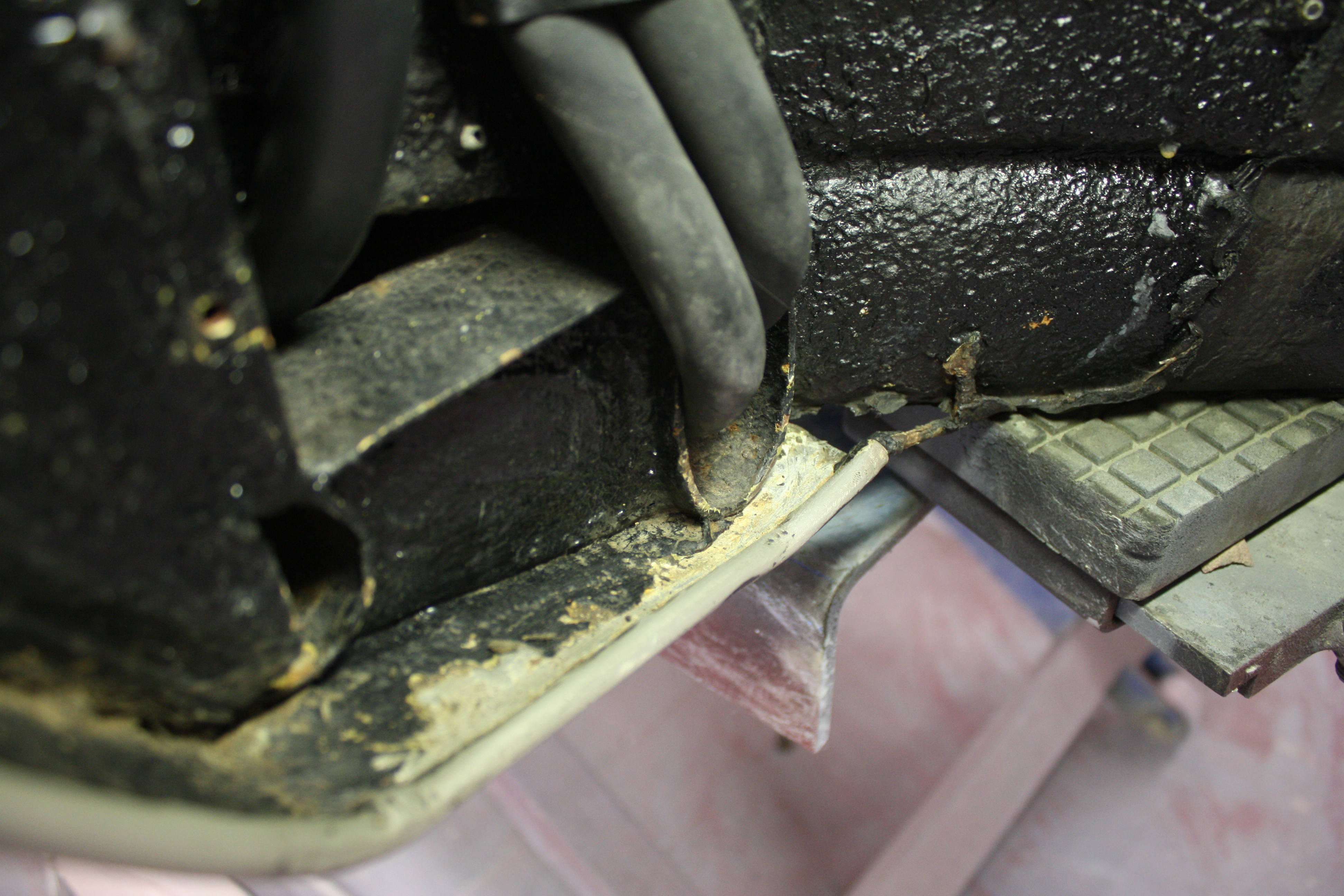
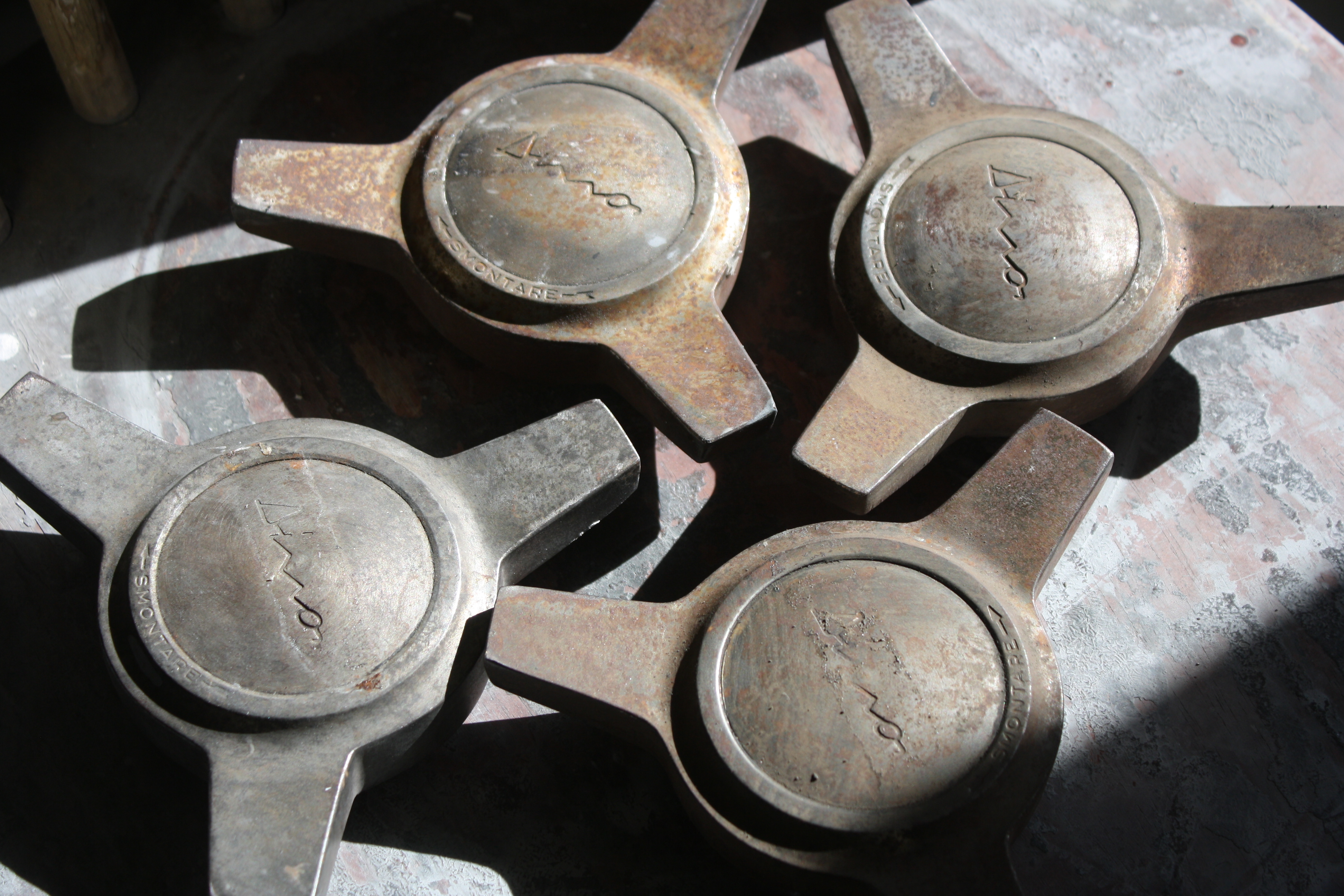
Now that the Dino wheels are done and painted these Fiat wheel knockoffs will soon be on their way to be chromed … so much for the patina! Actually, they’re in really nice shape. The edges don’t look like they’ve ever been beaten with a steel hammer or something that would damage the edges of the spinner ears.
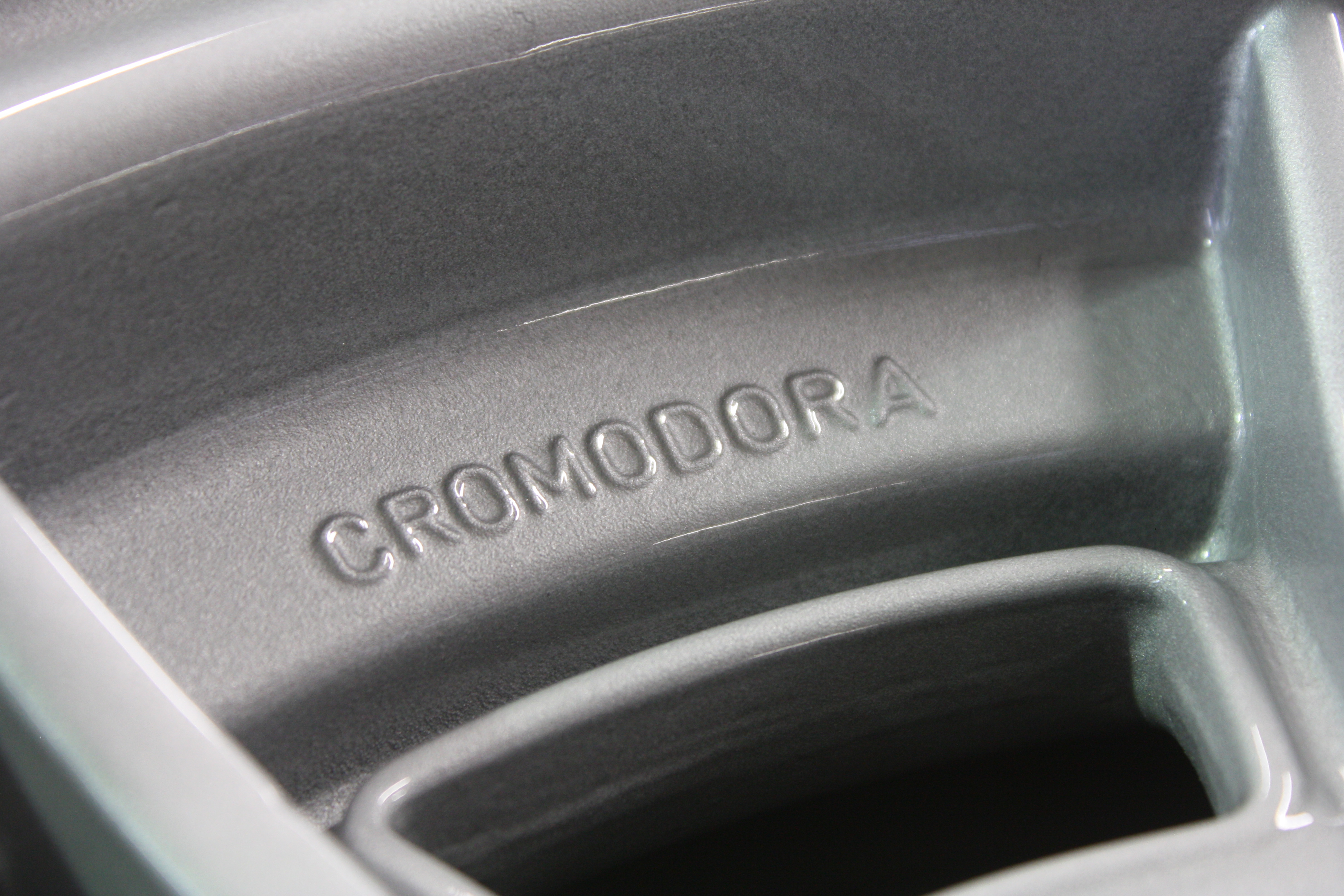
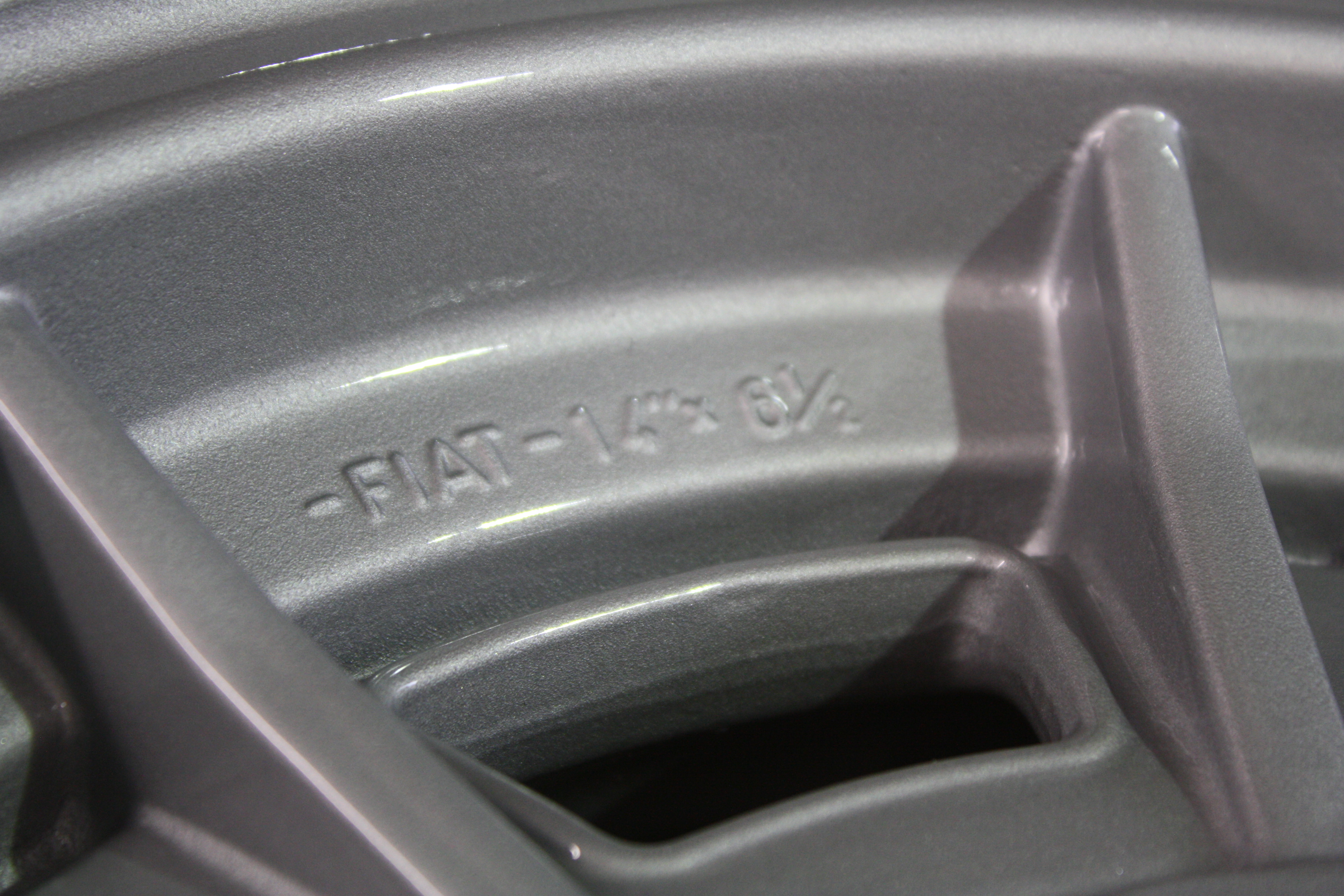
There is one thing… the wheels had a lot of big nicks in them from people missing the spinner ear and hitting the wheel! Once they got them loose, they spin them off and drop them and of course they hit the wheel first then the floor. We fixed the wheels and painted them last week. Click here to see how we refurbished the wheels. The markings on these wheels show Fiat as well as Cromodora.

Color sanding and buffing was the name of the game this past week. With nearly 100 degree heat in Southern California we sure had a work out polishing this baby but it’s paid off in the end result. The Dino 206 is deep, golden, and smooth as a baby’s bottom. See the progress on the 206 GT page.




I have the best job. Seriously. I do what I really love. I create art. I work on some of the most remarkable cars in the world. And occasionally I work along with some of the most amazing people.
Like recently, I had the great fortune to meet Kurt Delimon. He has a BMW 3.0 cs, which he brought me from the Bay Area to refurbish a couple months back. Kurt was referred to me by Shawn Hanson, another 3.0 cs owner and a client of mine from the San Francisco area.
Beau and I worked our magic and turned out a great end result. It was an earlier restoration with a poor paint job. Kurt did not want to go into another complete paint job so we took the other option and color sanded and rubbed out the car complete, color matched the car and repaired and re-painted only the panels that needed to be re-sprayed. After it was done it looked like we did a complete. Less time in the shop, saved him some money and got him back in his car so he could enjoy it.
Happy client. Actually happy clients… Kurt and Shawn left their wives at home and came down to Southern California to pick up Kurt’s car and road test it as they drove it back to the Bay Area. Great guys to work along with. They took interest in their cars and were involved in the project even from a distance.
Kurt took his car to the Pebble Beach Concours D’Elegance earlier this month. (Kinda’ feel like a little part of me went along). My son nd I had plans to go up to Pebble Beach with them but because of the Mercedes Benz shoot I was called on the plans changed. Although he didn’t have it judged he did show it with great response and he did have a chance to take a few nice shots. Thanks for the photos Kurt!
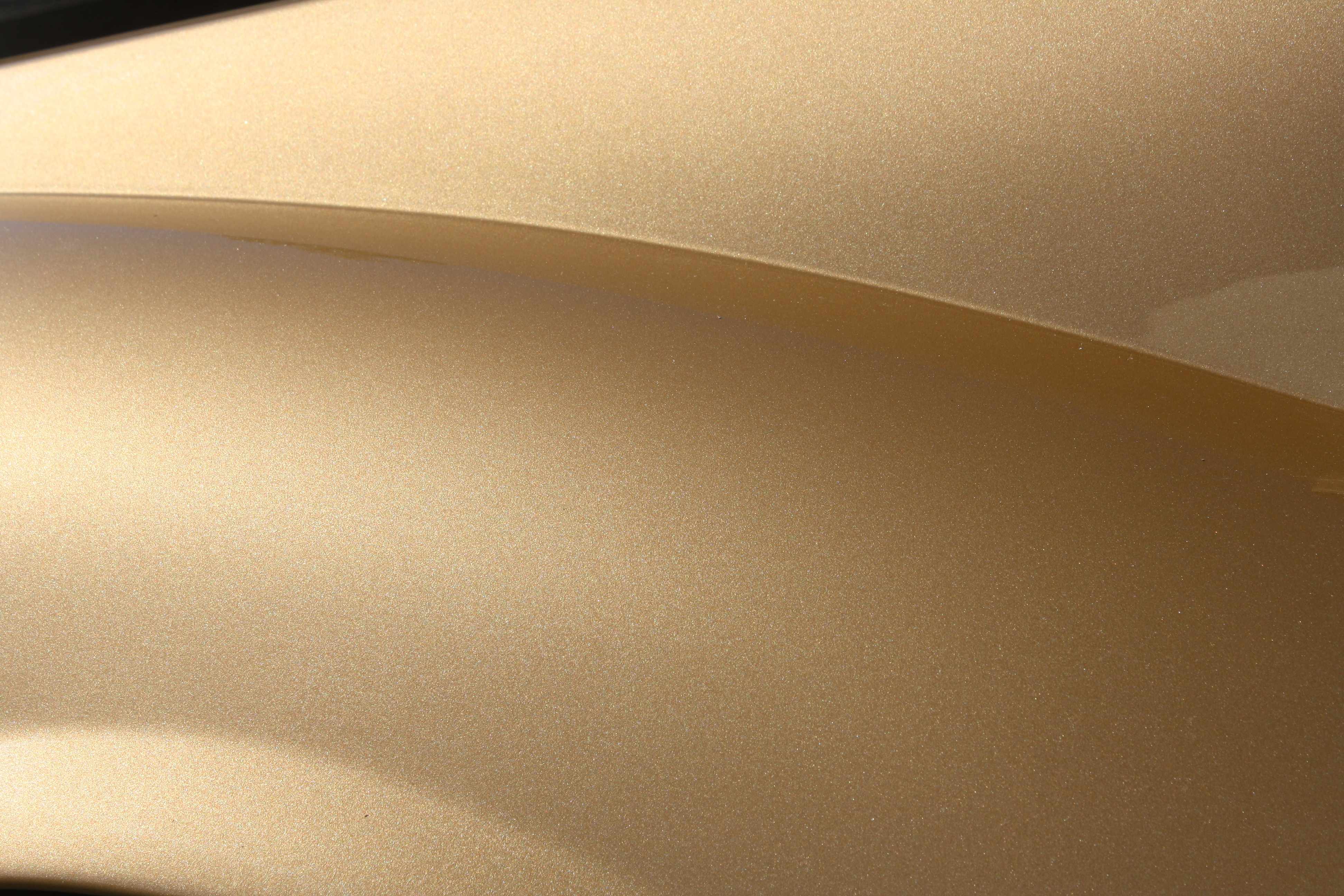
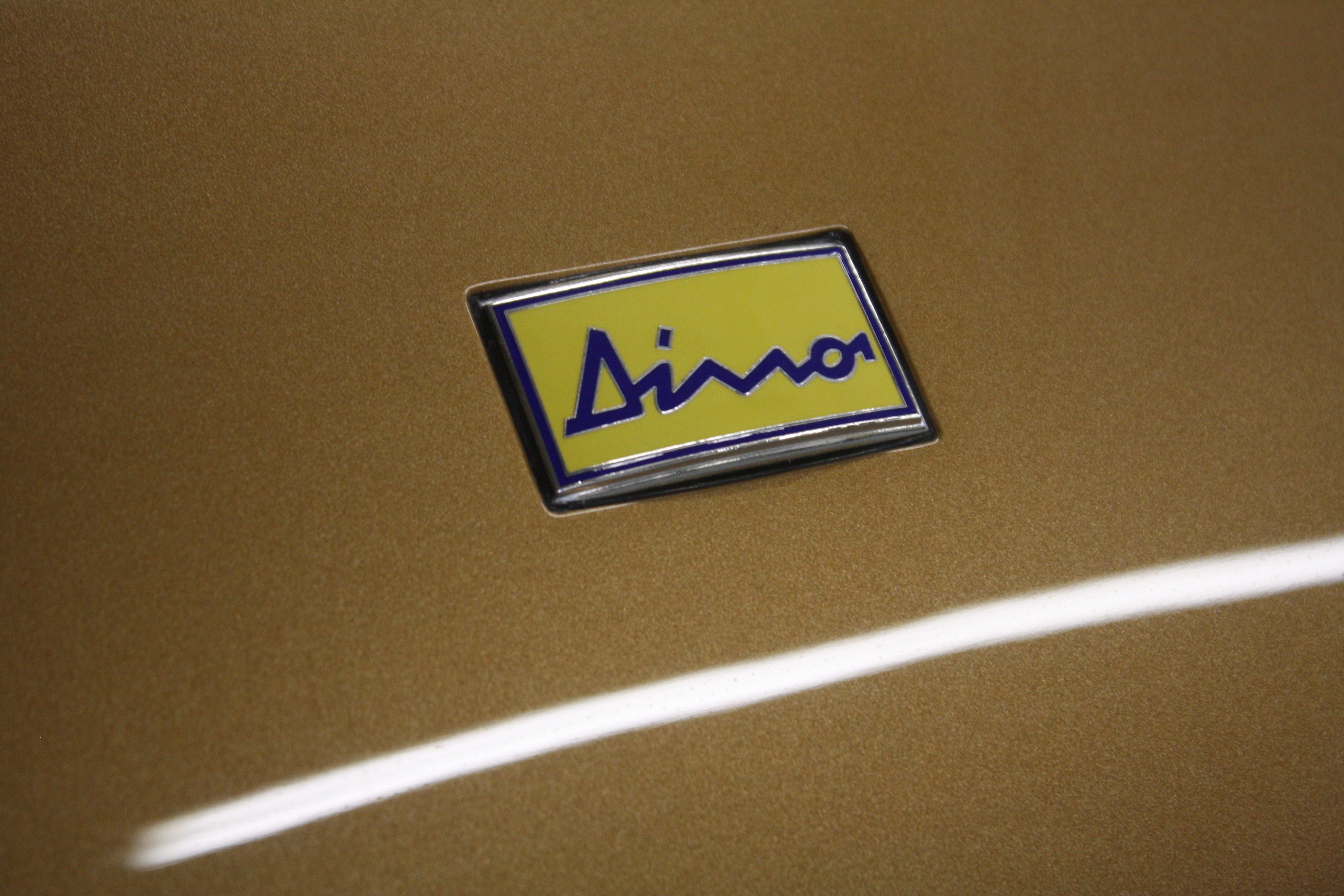
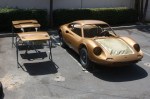
The Dino 206 is in color! And may I be specific? A stunning gold color called Nocciola Metallazzato. A very rare color. According to Matthias Bartz’s Dino Compendium, there were two Nocciola colors – there was a deep gold and a lighter gold. This one is the deep gold, which they painted only a few selected Dinos. Fewer yet of the 206’s. It was one of Pininfarina’s favorite colors. Matthias sent us a color chip, which had to be specially matched in order to get the color correct.
The car is coming along great and will certainly turn a few heads when rubber hits the road. We had to apply seven coats of base coat to achieve the correct color match. It sat over night in the spray booth. The next morning we color sanded the base coat and applied two more color coats to be certain the metallic was even and the falloff was correct. Then we applied four coats of clear. Base coating twice really makes the metallic pop – not like some jobs that look like cleared over popcorn or cottage cheese looking metallic. This metallic lays great and there’s a depth to the car’s surface. We hope to have it completely color sanded and rubbed out by next week.
Fittingly, the color of the car is a tribute to the owner’s last name.
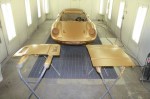
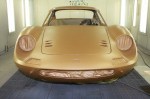
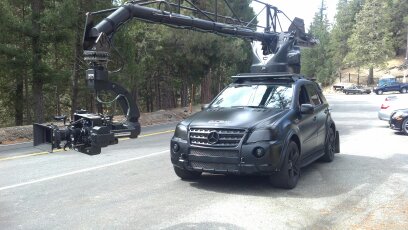
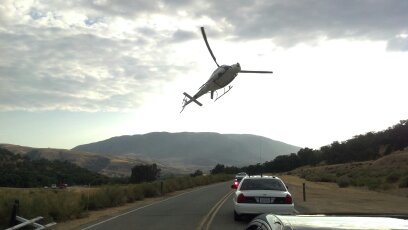
I sure enjoyed spending five days of my summer driving the new 2013 Mercedes Benz C-Class, the new SL 550, and the new 6.3 for a film shoot to produce a video brochure for Mercedes dealerships. These cars are masterpieces in engineering and superb high-performance vehicles. It was a treat to drive them.
The new SL is considered “Super Light”, which helps a lot with the performance. Handling on all the vehicles – tire to road – was like driving on fly paper. Check out some of the photos from the five day shoot on my Performance Driving page.
I enjoyed working with Merkley + Partners’ Senior Producer, Erik Iversen as well as world renown director, Richard De Aragues. The pursuit team from Shelly Ward Enterprises brought a lot to the show to make it all happen as well as their A+ car prep!
The photo in the previous post is a negative of a wood screw used to hold together layers of wood forming a wooden “buck”. A wooden buck is a hand-built form that is used to define the shape of the vehicle model. Many of these various bucks were made to pre-form panels to form the parts needed to build the Dino 206. The craftsmen hand molded the metal to conform to the buck by using various tools.
That’s a pretty simplified and brief explanation of a lengthy and detailed process. It is a long, difficult and delicate method of building a car by hand and is far more art than science.
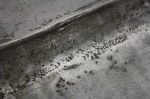
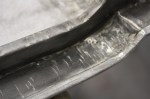
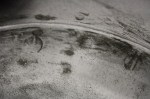
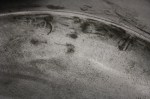
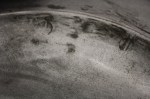
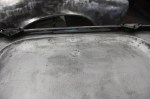
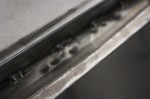
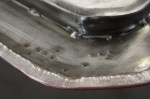
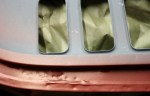
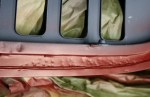
The Dino 206 is one such car for which a wooden buck was used. Evidence such as the negative screw head in the aluminum of the engine cover is one clue to the craftsmen’s work. Other such proof, as seen in the following photos, are the hammer markings where they shaped the metal to form the buck. These markings are only in areas where it’s not obvious and certainly not on the exterior of the car.
I believe revealing a minimal amount of these markings in certain areas is O.K. I see the trend turn as more and more owners want to reveal these marks of the craftsmen that built their car. I have a hard time burying these marks in undercoat like other painters do (I know because I end up stripping it). I don’t believe Ferrari factory used undercoat especially underneath the hood, deck lid and engine cover. From what my sources tell me, Ferrari only used a satin or matte black paint under the panels. Also, these marks would never be a deduction of points if judged in certain concours shows.
 Bella Classics by Steve Kouracos